
Sts Peter and Paul offers a unique curriculum that takes the excellence of a traditional primary education and blends it with innovative and flexible methods. The curriculum is woven together by a Catholic ethos with an emphasis on values. Through careful design, our curriculum:
- Focuses on the individual
- Aims for deep learning
- Is designed to promote motivation, confidence, self-organisation and independence.
Teaching and learning
Reading and writing at sts peter and paul
Literacy
Through this subject, students learn to listen, read, view, speak, write, create and reflect on spoken, written and digital texts. The subject is therefore given high priority in each classroom.
Explicit pedagogies are used to develop academically rigorous programs. The evidence-based Science of Reading approach informs all reading instruction. The six components of reading underpin reading instruction include oral language, phonological awareness, phonics, vocabulary, fluency and comprehension. Students are taught to read using a systematic, synthetic phonics approach. As students progress to higher grades and can confidently decode texts, the focus shifts towards reading for comprehension and developing a broader vocabulary; reading becomes an essential vehicle for acquiring knowledge. Similarly, students are taught to write using a systematic approach, by first developing letter-sound relationships and strong oral language, and sentence-level writing, then paragraph and multiple paragraph writing. Students write informative, entertaining and persuasive texts. Through weekly library lessons, students are given the opportunity to read and respond to literature. The goal of our English program is that all students finish primary school as fluent and engaged readers and writers.
In K-2, lessons are guided by InitiaLit, an evidence-based whole-class Literacy program. This program includes daily reviews, oral language, phonological awareness, phonics, vocabulary, fluency and comprehension, as well as sentence-level writing.
In Years 3-6, English lessons at Sts Peter and Paul commence with a daily review of previously taught subjects and are followed by explicit instruction in reading, with opportunities for practice. This format is then repeated for writing instruction.
In Years 3-6, students participate in Spelling Mastery Lessons four times a week. Spelling Mastery provides structured lessons to effectively and efficiently teach the spelling skills students need to become proficient readers and writers.
Mathematics Teaching at Sts Peter and Paul School
Numeracy
High Impact Teaching Practices (HITP), particularly Daily Review, Explicit Lessons, Checking for Understanding and Questioning, are fundamental components of our Mathematics programs at Sts Peter and Paul Primary School. These practices, embedded in our low variance curriculum, are further enriched with timely and targeted applied experiences. Carefully crafted open-ended problem-solving tasks provide opportunities for our students to contextually apply their knowledge and grow as curious learners. Our balanced approach to the teaching and learning of mathematics enables students to enhance their conceptual understanding, mathematical fluency, strategic competence, adaptive reasoning, and productive disposition.
Assessment
Assessment to inform learning includes:
- Observation, questioning and discussion
- Formal assessment
- Feedback to guide students.
Regular classroom assessment tasks include diagnostic, formative and summative tasks and are supplemented by tools that focus on number sense. Scheduled home learning activities are provided to consolidate student learning that takes place during school hours and develop the partnership between home and school.
Enrichment activities
- Leadership training
- Japanese
- Environment centre (cooking using produce from our own gardens)
- Library lessons
- Sport
- Performing Arts including music, school choir and drama
- Class buddy systems
- Inter-school debating and Rostrum public speaking, speech and drama
- Lunchtime clubs: library, chess and gardening
- Camps, excursions and incursions
- Integration with Malkara Special School
- Music tuition: keyboard, guitar and violin.
science, technology, engineering and mathematics at sts peter and paul
STEM
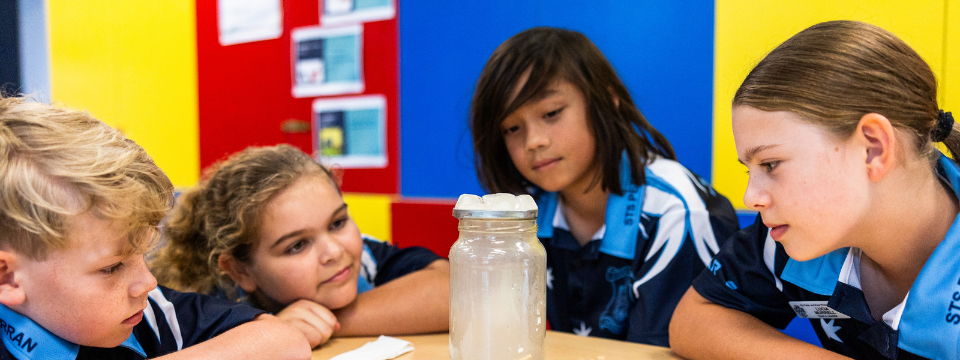
Here at Sts Peter and Paul, we have a dedicated STEM program which enhances the opportunity to build resilience through trial and error, to develop courage, foster change, and collaborate through connection to the community and global initiatives.
The program acknowledges that children are the most innovative people in the world because they do not subscribe to the ‘can’t’ rule. We foster experiential collaborative learning to find creative solutions to real-world problems and encourage students to make a small difference and spread the word.
This program incorporates components of the Australian Curriculum 9.0 and includes a focus on First Nations history as the original innovators of our country.
Library
Library lessons and programs
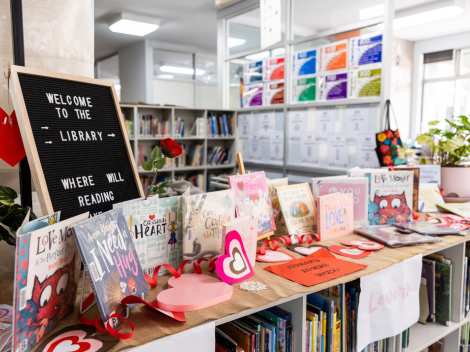
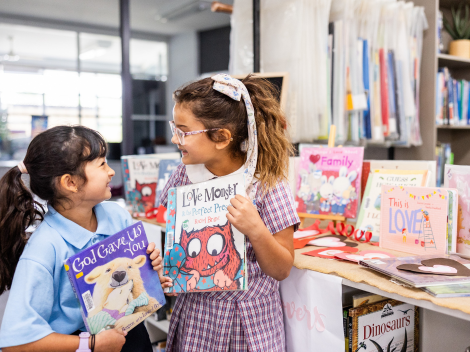
Library lessons are designed to foster a love of reading and develop essential information literacy skills, enabling students to become confident users of the library and its resources. Students are encouraged to borrow books during their library lessons and also during lunchtimes throughout the week.
Information literacy skills
Information literacy skills are crucial for developing lifelong learners. The teacher librarian collaborates with teachers to ensure that these skills are developed sequentially and integrated across the school curriculum. Information-based programs help students acquire the skills necessary for accessing information, gaining knowledge, and using information for personal growth and fulfilment.
Information literacy involves:
- Defining: What do I really want to find out?
- Locating: Where can I find the information I need?
- Selecting: What information do I really need to use?
- Organising: How can I best use this information?
- Presenting: How can I present this information?
- Assessing: What did I learn from this?
Students who effectively use information can:
- Continuously add to their core knowledge.
- Use a variety of information sources and technologies.
- Process encountered information.
- Use information confidently and effectively.
Student-centred learning, where learners are actively involved in their own learning, provides greater learning benefits to students.
Performing arts
The performing arts program is made up of music, dance and drama, with the lessons designed to weave together. Music is a combination of instrumental and theory, starting with vocal and basic percussion in kinder; building on these skills in Year 1 before moving onto the recorders and glockenspiels/mallets in Years 2 and 3. Year 4 look into the world of boom whackers, Year 5 explore the string family as they learn the ukulele, and by Year 6, we bring it all together as we look into the world of African percussion and djembe drumming.
The concepts learnt in music are the base of dance and even pop up in drama. We bring what we learn in music into our dance lessons as we explore how our body moves, how to use space, how to dance as individuals and together. Kinder and Year 1 start our program with learning how to dance safely, working with the music and exploring movement through Hip Hop. Years 2 and 3 travel around the world as they learn to dance together in folk and bush dancing. Year 4 take up line dancing and find out how dance can cross over into a range of genres. Years 5 and 6 explore the cultural aspects of dance as they explore the dances of Hawaii and Africa.
Drama is not just about acting. We learn about the rhythm and beat of language and movement, how to use language – our voices – our bodies to communicate ideas and how we can work together to do this. Kinder and Year 1 explore how to use their voice, working towards creating characters. Year 2 take this knowledge and use this to create puppet characters. Year 3 takes this into the world of Readers Theatre, looking at how to read scripts and communicate with an audience. Year 4 takes this a step further as they explore fairy tales and how to create their own readers’ theatre. Years 5 and 6 look at theatre and musicals as we practise the skills needed for the biennial School Musical.
In all arts, our goal is to tell a story, paint a picture or evoke a response from our audience. We learn, we create, we perform – and we have fun.
Extra curriculum
Lunch and recess activities
Drama Club, Dance Club, Singing Club, SPP Mallet Band, SPP Drums and Piping Band (Scottish Bagpipes sponsored by the Canberra College of Drums & Bagpipes) and Lunch Performance (students can book a time to perform for their friends at school).
Paid Tutor activities during school hours are also available.
Japanese
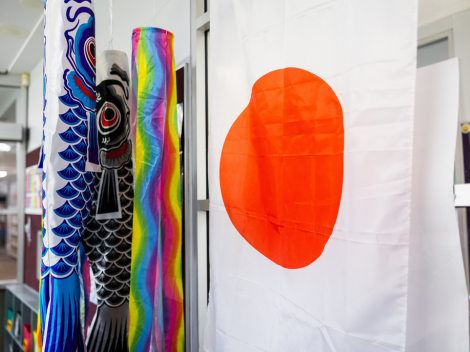
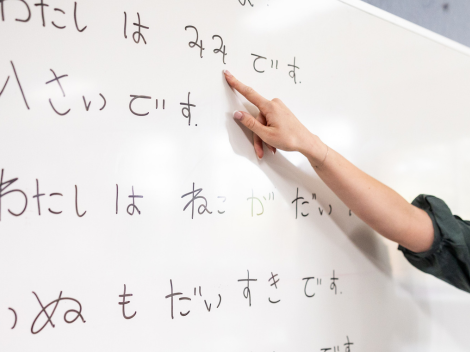
Japanese is an established part of our school’s curriculum, with all children participating in the Japanese language program. Our aim is to inspire enthusiasm and curiosity about the Japanese language and culture while providing engaging and meaningful learning experiences. Students are given opportunities to develop their skills across all areas of language learning. They learn to understand and respond to basic Japanese instructions in a bilingual classroom environment and gradually build their knowledge of hiragana, katakana, and kanji. Students also use romaji to support the development of their reading and speaking skills. Through songs, dance, games, and interactive activities, they expand their vocabulary and develop the confidence to understand, translate, and communicate in Japanese. Every child is encouraged to explore the language and build their skills in a positive and supportive learning environment.
Studying a language fosters the development of higher-order thinking skills. Engaging with another language and translating between Japanese and English requires students to analyse, problem-solve, make connections, and think creatively. Language learning also strengthens comprehension and inferencing skills while encouraging learners to recognise patterns, compare concepts, and develop a deeper understanding of both language and culture. These skills support learning across all curriculum areas and help students become confident, flexible thinkers.
Kitchen garden
Our kitchen garden was created to provide edible, aromatic and beautiful resources for our school kitchen, and in turn teach our students about the natural world. Students develop an appreciation for growing, harvesting, preparing and sharing seasonal produce that uses all the senses. Gardening Club encourages students to help care for our garden and gather and share some fruits and vegetables with the school community.